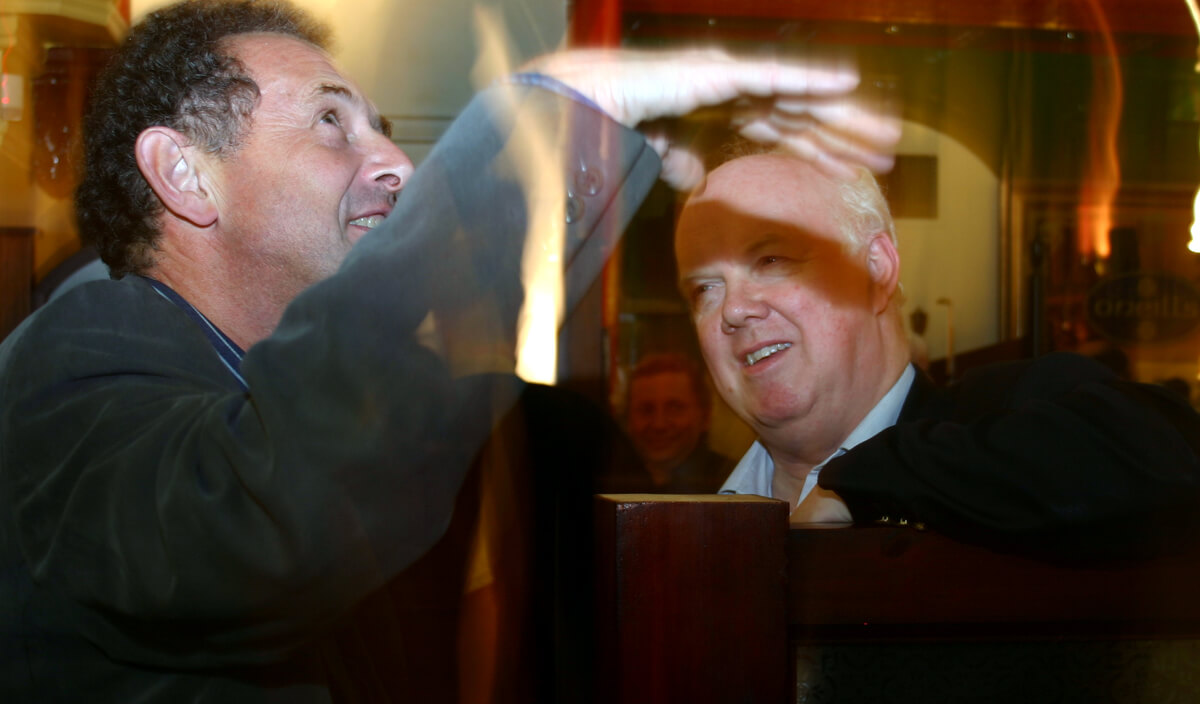
Friend Adam Christie writes about former MP and long-time NUJ member Michael Meadowcroft, who died on June 1st, aged 84, after a short illness.
Finding work when you’ve lost your seat as an MP is never easy, especially if you’ve got yourself noticed.
Former West Leeds Liberal Democrat MP Michael Meadowcroft discovered that the hard way after being beaten by Labour’s John Battle in 1987.
“No-one,” Michael said, “wanted to employ an ex-Liberal MP” and so, for the next two years journalism was his living, producing regular columns for The Times and the Yorkshire Post as well as other writing. (The Policy Studies Institute boosted his prospects by giving him what he called “the exotic title” of distinguished visiting fellow in 1989.)
Before and during his time in parliament, Michael appreciated the benefits of regional television and local radio in establishing what we now call “brand recognition” as a candidate, always being available to Calendar and Look North and making regular appearances on BBC Radio Leeds and the late James Whale’s popular late-night show on Radio Aire.
Despite establishing a second career as an expert on elections, becoming chair of the Electoral Reform Society (as a passionate believer in multi-candidate constituencies elected using proportional representation), he was increasingly hired by the United Nations and European Union to advise on policy and practice in newly-emerging democracies following the collapse of the Soviet Union in 1990.
Over quarter of a century, he took part in work that involved more than 50 trips to 35 countries. Arguing that “very few national frontiers are a consequence of geography; most are a result of war or of a political carve up”, Michael was a vocal advocate of the World Citizen movement as a force for peace and a proud carrier of World Citizen (and press) cards.
Politics, political philosophy and political practitioners were ingrained so deeply and his knowledge and reading so vast that over the years Michael also became a niche “go-to” obituarist for the Yorkshire Post, Guardian and numerous, specialist, political titles.
He strove, he said, to be objective, telling stories that – while not always appreciated by his subjects’ families – provided what he felt to be the most honest portrayals of individuals who had contributed to public life.
The grandson of a railway signalman at Sowerby Bridge, Michael was born in March 1942 in Elland, although he grew up in Southport, on the Lancashire coast, after his grandfather was promoted. Despite a grammar school place, he left school “prematurely” at 16 to become a bank clerk because, he said, of “domestic economic problems”. His father had, he told Leeds Student in 1984, lost his job through illness.
“An anarchist at heart, but constitutionalist by conviction”: How Michael Meadowcroft described his political philosophy in an interview for Leeds Student in May 1984
Politics were, however, already in his blood. In 1958, he also joined the Liberal Party, leaving the world of finance to move to London to work for the party four years after that.
He returned to Yorkshire in 1967 to run the Liberals’ regional office and was elected to Leeds City Council the following year, going on to lead the Liberal Group until 1980. He also spent seven years on West Yorkshire Metropolitan Council before being elected MP for West Leeds in 1983. This was, he said proudly, “the first parliamentary Liberal gain from Labour in a General Election for more than 50 years.”
As an NUJ member, Michael became secretary of Leeds branch in the 1990s. During his time on Leeds Council, he also ensured that the maverick alternative publication Leeds Other Paper received agendas and other documents when the authority tried to exclude them from proceedings.
Later, he provided informal advice and introductions to support the union’s political campaigning, particularly when investigatory powers legislation was going through parliament in 2015, providing a contact that allowed coordinated questioning from Liberal Democrat peers when the law was scrutinised by the House of Lords.
He also found time to support individual NUJ members with causes such as raising the pan-EU profile of those who “disappeared” during the Franco regime in Spain and efforts to try to preserve invaluable newspaper cuttings’ libraries as district offices were being closed and regional titles downsized in the 2010s.
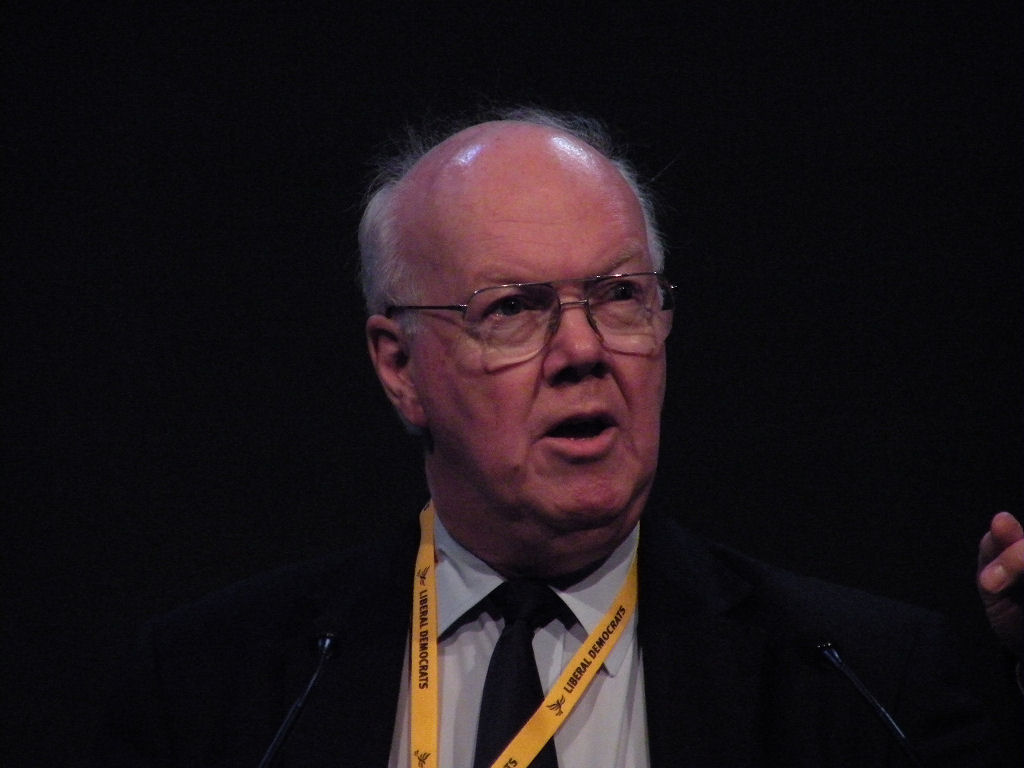 Source: Keith Edkins/Creative Commons | CC BY 3.0 Unported
Like many an imaginative journalist, Michael found ways of combining business with pleasure. He wrote about jazz – playing clarinet in Granny Lee band – which appeared regularly in Leeds and London, and about wine.
In 2006, Michael and his wife Liz Bee produced the first guide to an “up-and-coming” appellation, at Faugères, inland from Béziers in the Languedoc. The extensive research entailed visits to more than 30 vignerons and wineries over several summers after he had been named a Chevalier de la Commanderie du Faugères, a select local fraternity of wine producers and experts in 1998. It was published in English and French.
A lifelong union member, first in the GMB then the NUJ, Michael was also passionate about political topics that didn’t always make him popular, believing that politics were better rooted in philosophy than expediency and described himself, in an interview for Leeds Student in May 1984 as “an anarchist at heart, but constitutionalist by conviction”.
In a personal statement of principles written for the Green Liberal Democrats published online in 2020, Michael cited John Stuart Mill’s principle that “individuals are free to do whatever they wish provided others are not harmed”, enshrined as clause IV of the Declaration of Human and Civil Rights in 1789 (that remains part of France’s constitution today). That belief was at the core of his life and work, in politics and journalism.
As happy at the Leeds Club as the National Liberal Club in London, where he was vice-president, he also chaired the trustees of Leeds Library and, more recently, helped win a notable victory as chair of the TV Harrison Community Action Group to preserve sports facilities in west Leeds.
Michael’s voluminous archives have a home – at the British Library of Political and Economic Science, part of the London School of Economics.
He is survived by his wife, two children, seven grandchildren and four great grandchildren.