
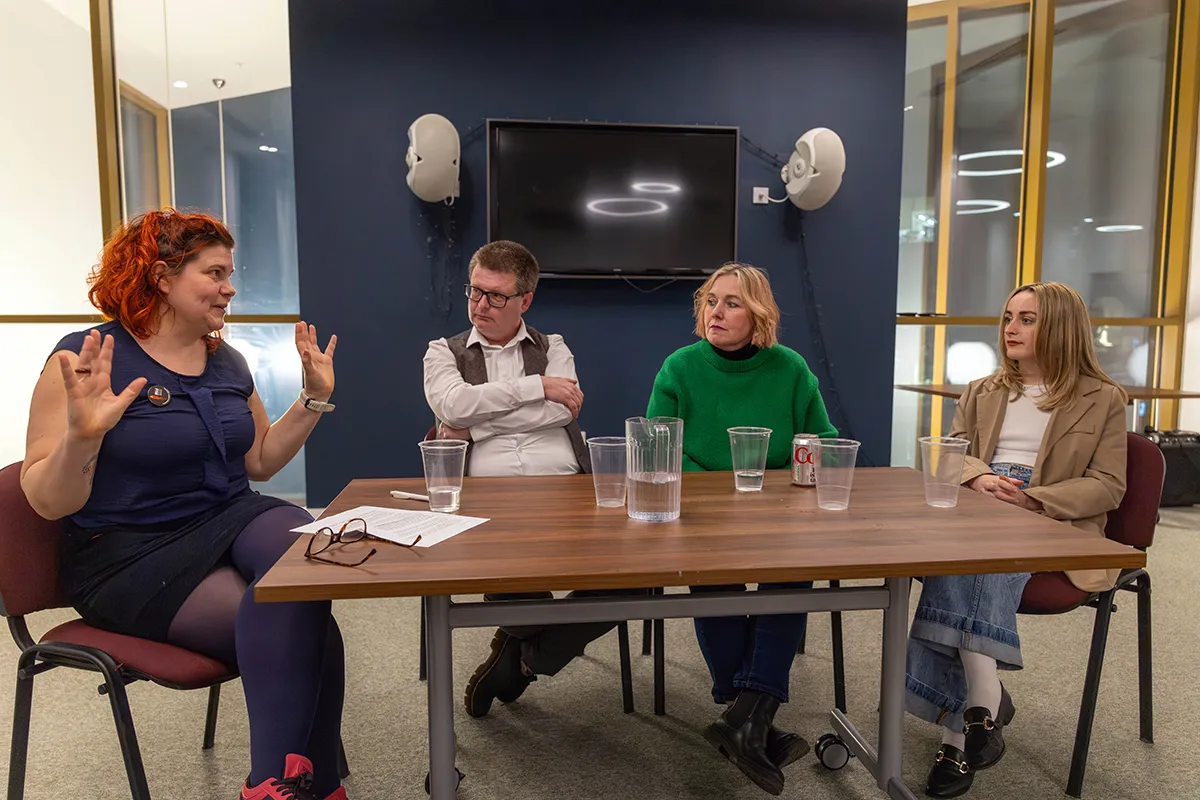
“What keeps me going is lunacy as much as anything!” joked John Baron as he reflected on a career spent championing local journalism, most recently as editor of the West Leeds Dispatch.
It’s a feeling many NUJ members will relate to, sharing as they do his belief in the value of news rooted in communities but also knowing the challenges of finding ways to make it pay.
So what is the future of local news? This was the theme of a panel discussion at our branch AGM, chaired by vice chair Katie Hall.
While the large regional publishers flit between chasing sufficient scale to make digital advertising pay and subscriptions for premium content, the Dispatch has a very different focus.
“It’s all about empowering local people to have a voice,” said John.
It started with a public meeting in Bramley 11 years ago after the mainstream media had largely withdrawn from community reporting.
“People didn’t feel they had a voice anymore,” he said. “They didn’t feel connected.”
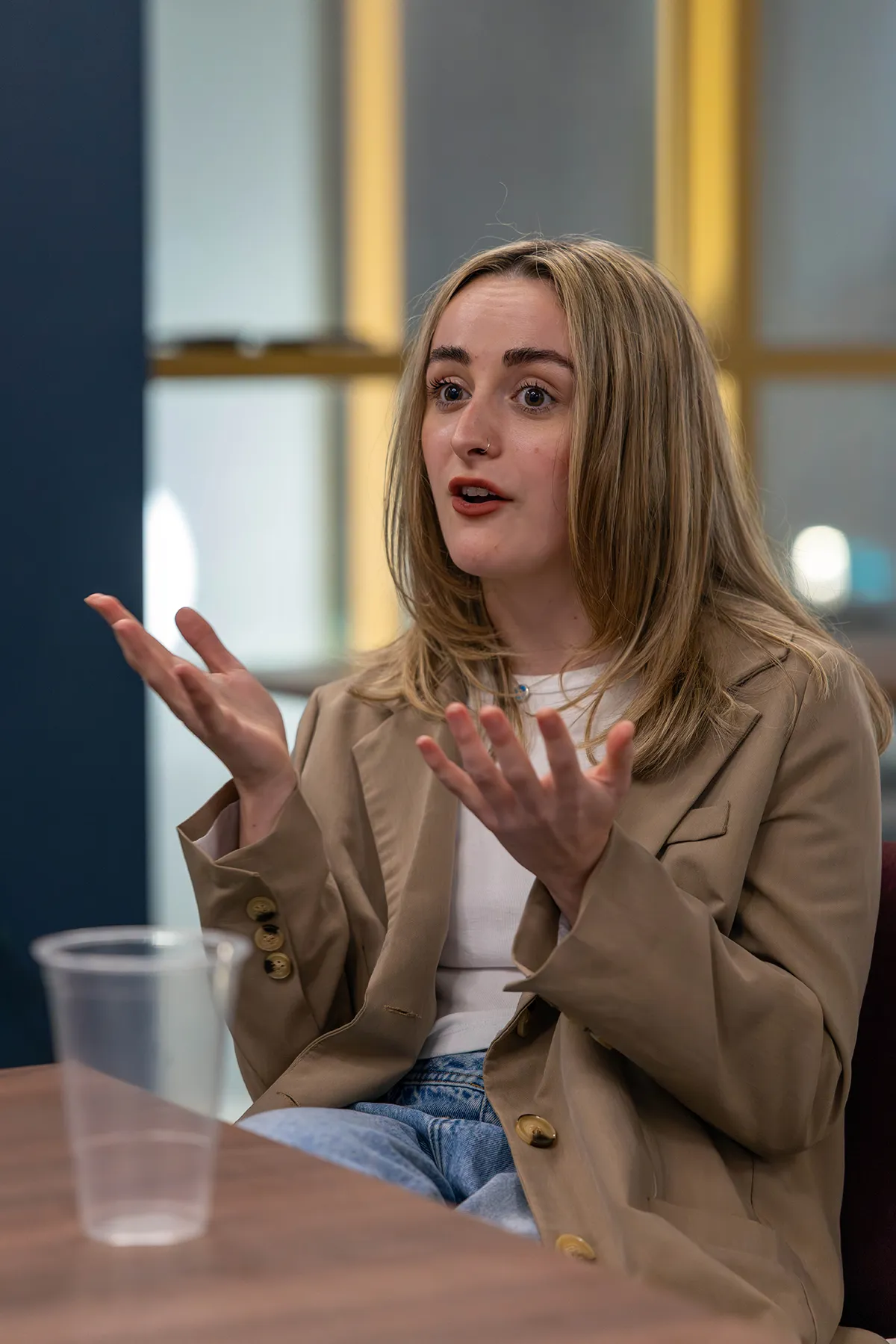
A similar disconnect between the national media and people outside of Westminster is something that Peg Alexander has been troubled by for some time now.
A broadcaster, charity CEO and former politician, she said she had been reflecting on the Green Party’s success in the recent Gorton & Denton byelection, which the national media had mistakenly pitched as a battle between Labour and Reform UK.
“I got increasingly frustrated by the complete lack of nuance and understanding in the national media,” she said, contrasting that with local journalism that really reflects an area.
 Source: Bob Smith
“You can have a much more sophisticated understanding and analysis of what’s going on and how people feel.”
A more thoughtful and in-depth style of journalism – delivered straight to readers’ inboxes – is what Mill Media aims to offer.
Abi Whistance, editor of its Liverpool title and a former Yorkshire Evening Post reporter, was the third of our panellists.
“It’s just a different way of working,” she said. “When you see the shift towards ad revenue funding publications, we’ve ended up in pretty dire straits. It’s not sustainable anymore.
“It’s about finding creative solutions to that and I like to think Mill Media have.”
The publisher, which is in the process of launching a new Leeds and West Yorkshire title, has a mixed model of free newsletters and subscriber-only newsletters for those willing to pay to support its journalism.
Abi said there was more time to invest in stories and investigations compared to her experience with a local newspaper website, where reporters are typically subject to individual page view targets, story quotas or similar metrics.
Focusing on writing one longer read per week means you “can really give it everything you’ve got”, she said, but some of the most complex stories will take months of work.
Like Peg she spoke about the importance of building a relationship with readers and knowing the communities you are serving.
At the Dispatch, there’s no shortage of local knowledge thanks to its community-led board and the team of local people trained up as community reporters.
Local partners, such as Bramley Bath and Sunny Bank Mills, support its work, while a three-year National Lottery grant of £140,000 means success isn’t measured in page impressions.
Instead, John explained, it’s about the social impact and how their coverage of hyperlocal issues such as planning and licensing applications can drive engagement with local decision-making.
 Source: Bob Smith
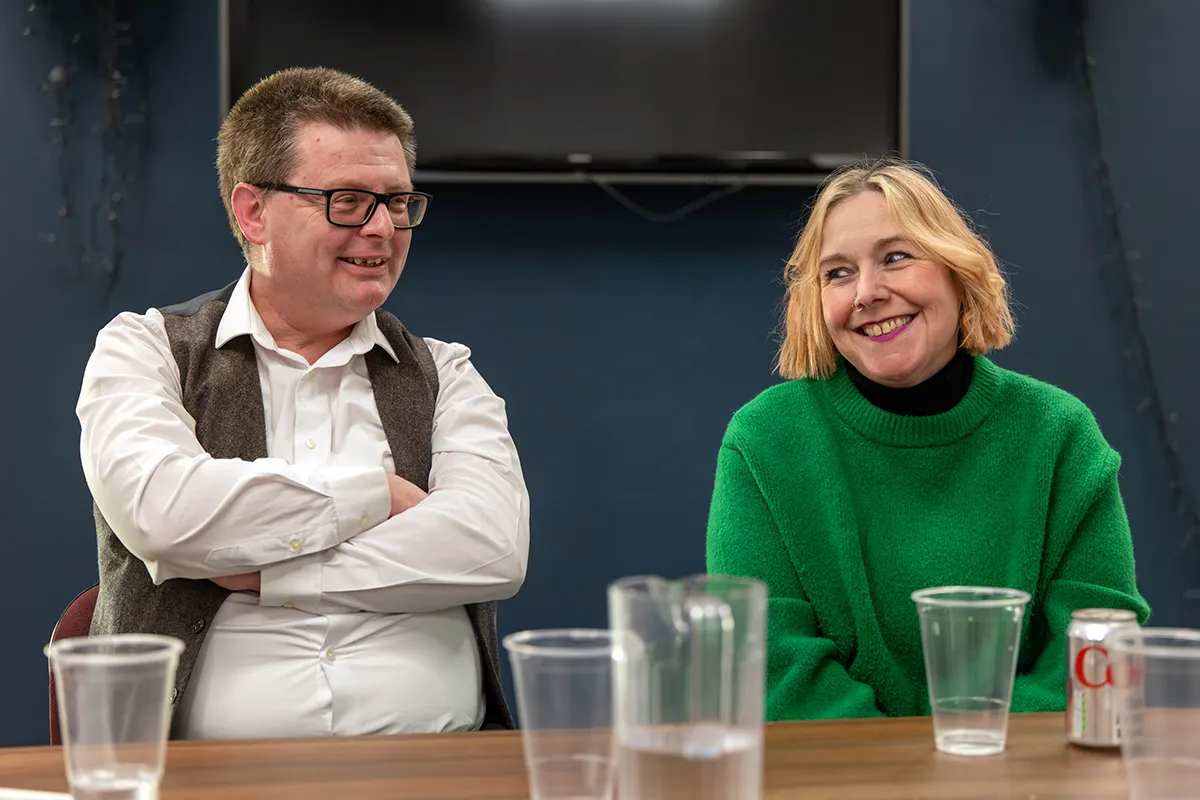
John said: “The biggest figure for us last year was 15. We did a story about a new ADHD group launching. The success for us was that we connected 15 people to attend the group the next week.”
Coverage of the planned closure of Abbey House Museum, local people’s views, the resulting protests and council meetings where it was debated was another success, with the decision being made to keep the museum open in the end.
The meeting heard there are around 400 independent news operations up and down the country, including South Leeds Life and East Side Story – a new organisation formed out of the Harehills riots in Leeds in 2024 and what it’s like having people from outside your community reporting on events.
Abi said: “I would hope people will rallly behind small publications. We should be paying our journalists because they all work incredibly hard.
“We just have to find different ways of finding that funding and communicating our value to readers.”
One member asked whether publishers had made a mistake by focusing for so long on scale instead of levels of engagement.
Some are now trying to pivot to subscription-based models having spent years chasing clicks, but Abi observed: “It’s hard to change the perception of a title once people see it as just clickbait.”
Asked where she sees things heading, Peg said: “I wonder if there’s going to be a shift and a change around podcasts. They’ve become so corporate and formulaic.
“They just seem to be these blokes in London interviewing each other.”
She believes there is a space for “new journalists to come out and make some really good stuff”.
On the central question of the future of local news, John added: “I think there’s hope. I think the days of the bigger corporate organisations are slowly going to slip by.
“If you can identify a niche and move into that niche, I think you’ve got a potential business.”