
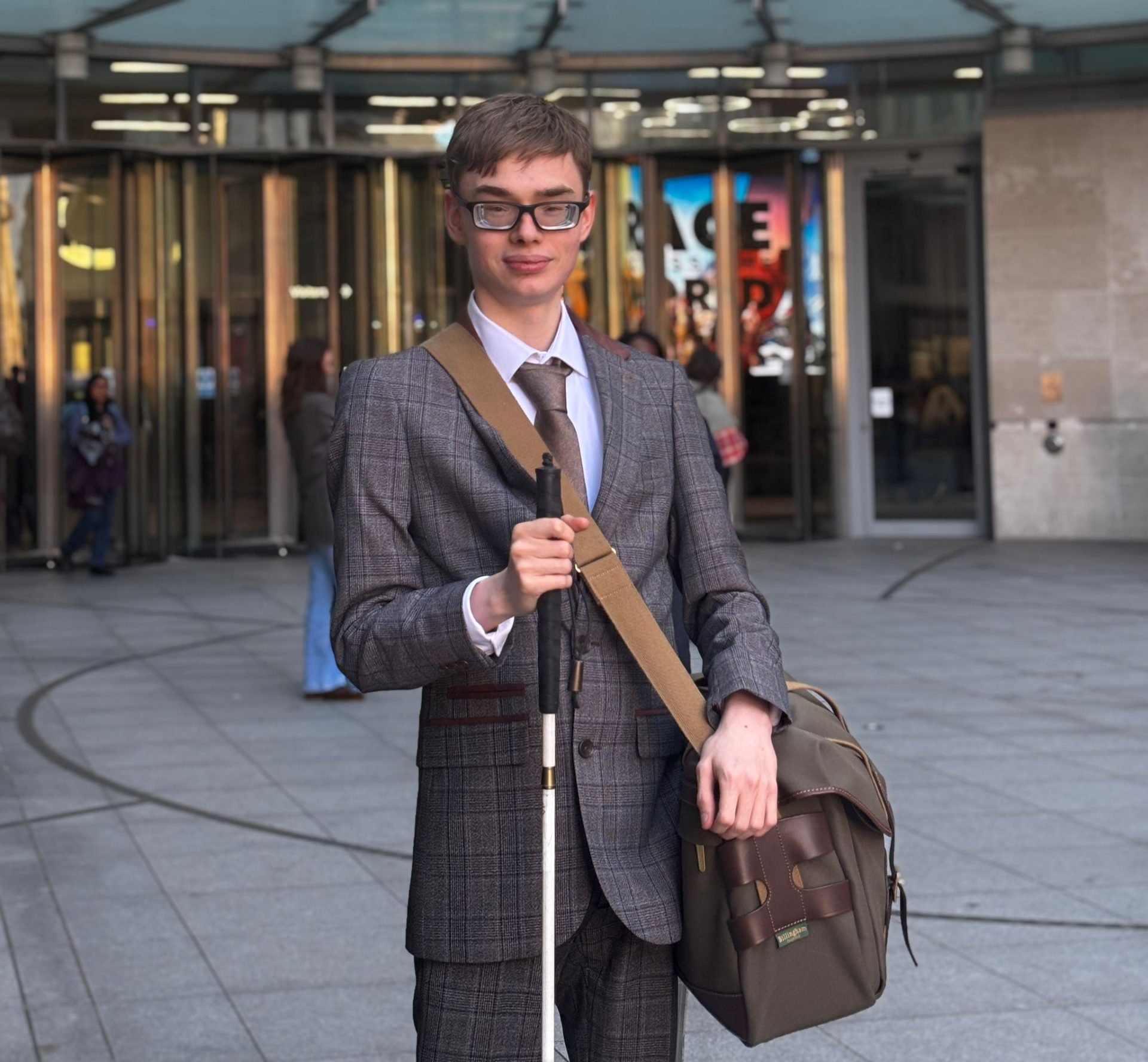
I didn’t expect my first day reporting from Leeds Magistrates’ Court (or simply ‘mags’) to involve me standing up and arguing with the legal adviser.
I’d never sat in a courtroom before, barely knew the layout of the building and my shorthand was about as useless as my left eye, so I had brought my trusty laptop and opened a blank document ready to take electronic notes.
One of the magistrates had noticed and the legal adviser promptly came over to tell me I couldn’t use it.
I explained, obviously nervous, that my understanding was that journalists were permitted to use electronic devices for note-taking unless the court imposed a restriction. The legal adviser agreed with me and explained the position to the magistrate.
In the weeks beforehand I had badgered the Royal National Institute of Blind People (RNIB) for an accessible copy of McNae’s Essential Law for Journalists, eventually getting it as an audiobook. Clearly it came in handy (branch members will know, as I didn’t shut up about it).
The magistrate accepted the correction and said nothing more about it. I sat down and carried on with what was ultimately a rather boring public order sentencing, plus contempt for all the shouting that followed from the dock.
It wasn’t exactly the dramatic courtroom confrontation you might expect would make a good book, but it was a fairly appropriate introduction to court reporting for me.
I had spent weeks preparing for the rules, pestering every former court and crime reporter I know about them, while still having almost no idea how to navigate the room in which those rules operated.
Since then, I’ve found court reporting both challenging and rewarding enough to keep doing.
I’ve had to learn the courts as a blind journalist as well as learn how to report on a variety of case types, and a lot of what seemed awkward at first has simply become routine. It’s also made me wonder why more young journalists don’t stick with it. Court reporting is difficult, but there is an awful lot to be gained from it.
I started covering courts because I knew I had to. At the time I was in the first year of my journalism degree at Leeds Trinity University and court reporting was one of those things I needed to learn. I’ll need to do plenty more of it during the looming NCTJ exams, so I thought I might as well get on with it.
Being visually impaired gave me another reason to prepare.
I’ve spent much of my life learning that it’s useful to go somewhere before I actually need to be there, so before I had to cover court for university I went to the magistrates’ court to work out the basics. Would my student press card be accepted? Where was the press room? Where were the toilets? How would I find an usher? And, perhaps most importantly, was the press room really a glorified store cupboard as everyone tells me?
Yes, it is!
That first visit meant that when I actually needed to cover court, at least some of the uncertainty had gone. Not all of it, obviously. Courts are confusing places when you’re new to them, and being unable to see the signs, room numbers and people around you adds another layer to an already unfamiliar environment.
The biggest difference now is that I know the building… which naturally meant I left and went somewhere else!
I’ve moved on from magistrates’ court reporting to regularly attending Leeds Crown Court, and much of what initially seemed difficult has become routine. I know security and where the courtrooms are, for example. I’m on the ‘regular list’ of attending reporters and sometimes I join proceedings remotely through CVP (that’s Cloud Video Platform), which can be more accessible in some circumstances.
‘I had to get used to the system…and the system had to get used to me’
I’ve also since travelled to courts in Bradford, York, Harrogate, Sheffield and most notably Hull, where I covered the sentencing of former funeral director Robert Bush. My clips of the court steps conferences were picked up by the nationals!
To put it simply, firstly I had to get used to the system, and secondly the system had to get used to me.
That second part is important because court reporting is, in my view, a very relationship-based form of journalism. Reporters who have been doing it for years know the ushers, solicitors and other regulars.
They recognise people across the room and know who they can approach for a quick clarification or a bit of information.
As a trainee, I’m still building those relationships and as a blind trainee, there are many occasions when I can’t simply look across a room and work out who someone is.
One of the most ordinary examples is finding a courtroom. If I need to ask somebody where I’m supposed to be, I can’t necessarily tell whether the person standing outside the door is an usher, a solicitor, a journalist (rare these days), a defendant or a member of their family.
Asking the wrong person could mean introducing myself as a journalist to somebody who is, in all likelihood, probably not particularly pleased to see the media. It’s a small thing, but there are lots of small things like that (Not that I get on very well with small things).
I wear my press card on a lanyard when I’m at court or council, which is something I don’t normally do, owing to some advice against doing so a long time ago. I want court staff to know that I’m media, but I’m also very conscious that being visibly identifiable as a journalist can attract unwanted attention from people involved in cases. I’ve had my fair share of glares and stares on the concourse, although I can never quite work out whether people are looking at me because I’m a journalist, because I have a white cane, or because they’re trying to work out how the blind bloke is able to write so quickly…
Safety is not something I think gets discussed enough when we talk about court reporting. Nor is the effect of repeatedly sitting through difficult cases. A court reporter can spend hours hearing evidence about sexual offences, violence and murder, then be expected to leave the building, write the story and move on to the next case. As trainees, we are taught the law and the reporting restrictions, but I’m not sure we talk enough about what the work itself can do to you.
None of this has stopped me from reporting from court. It has just meant that I’ve had to develop my own routines, and a thicker skin.
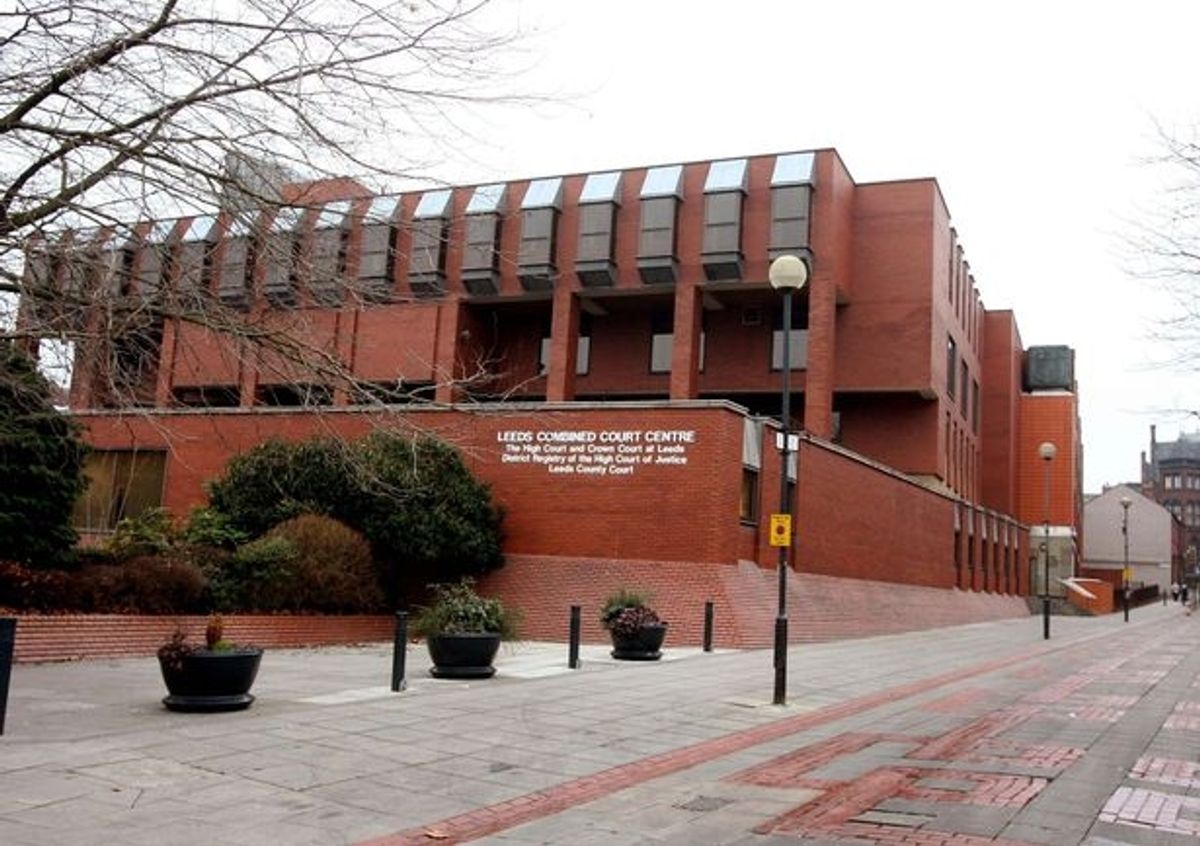
There is rightly a lot of discussion about accessibility for defendants, witnesses and jurors, but journalists have to navigate the same buildings and systems if the public is going to know what happens inside them. The first time I rang the CTS accessibility line, the rather perplexed Welsh agent told me he had never had a request for assistance from a member of the media. I found that quite telling. Not because I expected special treatment, but because it suggested that the idea of a disabled journalist needing to navigate the court system had barely crossed anyone’s mind.
My own experience has also surprised me in another way. I’ve found that I really enjoy the legal side of court reporting.
Law seems to come naturally to me. I find legal language relatively easy to understand because it is concrete and defined, and I suspect being autistic has something to do with that. I certainly didn’t grow up in a family of lawyers, so it wasn’t something I expected to discover I was particularly good at.
I’m doing much of my court reporting as a freelance and, ultimately, as training. I work with various local print and online outlets now, but I’m realistic enough to know that nobody is going to trust a trainee with court copy indefinitely just because they have a press card. I need to demonstrate that I can do the job, which is part of why I keep going back.
It would be easy for journalism students to treat court reporting as something that exists primarily to be passed in an exam. I certainly did not expect it to become something I would actively seek out. Some of the students in my first year disliked it so much that it made them reconsider journalism entirely. I can understand why. Sitting through serious criminal cases can be difficult, particularly when you are hearing evidence about offences that are profoundly unpleasant to contemplate.
Safe to say media law was not a firm favourite in anyone’s lecture timetable… except maybe me.
But that is also why I think students should do it. Court reporting forces you to confront the difference between reporting justice and dispensing it yourself. You can have perfectly legitimate views about a sentence, the crime or the criminal justice system, but the reporter’s job is not to decide what somebody deserves. It is to tell people what happened, accurately and fairly, and let them make up their own minds.
‘Most of us will be asked to report from a courtroom at some point in our careers – the only way to get comfortable is to actually go’
As a society, we spend an enormous amount of time arguing about the justice system from a distance. People debate whether somebody “got long enough”, whether judges are too soft or whether we should bring back the death penalty.
Fine I say. Have that debate.
But come to court first. Sit in the public gallery and watch how it works. Listen to the evidence, hear the legal arguments and see how decisions are made. Maybe then the debate will be a little more informed.
That is why I think court reporting matters. The principle of open justice means proceedings are conducted in public, but most members of the public will never sit through a case themselves. I wonder how many know they can just turn up to a court and pick a case.
For me, there is also something satisfying about proving that I can be part of that process. I don’t have a great court scoop to point to as proof that I’ve made it. I’m proud simply of the fact that I can turn up, find my way around and do the job. There’s no reason that in a modern society I shouldn’t be able to do that.
I suspect I am one of very few visually impaired journalists regularly reporting from court. I realised when thinking about this article that I hadn’t even asked the other blind journalists I know whether they had ever done it. I know plenty of print journalists who have covered courts. I know far fewer who have done so with a white cane or a guide dog.
There are things I won’t be able to put into copy in quite the same way as another reporter. I’m not going to be able to glance across the courtroom and tell you what a defendant is wearing, or tell you how unremorseful they looked in the dock. If it matters to the story, I have to find another way of getting that information.
What I can do is understand the law. I can listen. I can learn the building, learn the routines and keep turning up.
That, ultimately, is what court reporting has taught me. It was confusing at first, but repetition makes things normal. I had to get used to the court, and the court had to get used to me.
If I can do it, blind, while still learning that most-confusing skill of shorthand and the craft of journalism, then I hope more journalism students will give court reporting a proper chance.
It isn’t just an exam subject to scoff at. Most of us will be asked to report from a courtroom at some point in our careers, and the only way to get comfortable doing it is to actually go.
We might as well learn to like it, white cane or otherwise.